

Recently, I had the chance to present at the Finance Special Interest Group (SIG) at Oracle’s offices. The conversation that followed was not really about AI itself. It was about whether organisations are genuinely ready for it.
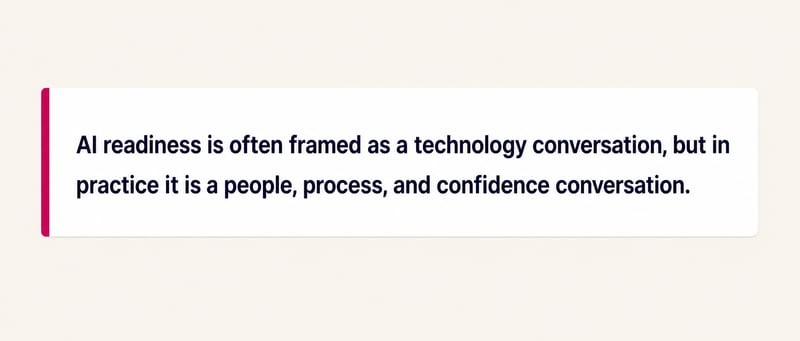
That distinction matters. AI readiness is often framed as a technology conversation, but in practice, it is a people, process, and confidence conversation. The systems are evolving quickly, while the teams using them are still working out how to build trust, consistency, and good judgment around tools that are already landing in their day-to-day workflows.
This blog reflects on that session, customer reactions, and what it tells us about where Oracle Guided Learning (OGL) fits within Oracle Fusion Cloud as it moves into the era of AI Agents and Agentic Applications.
What I shared at the Finance SIG
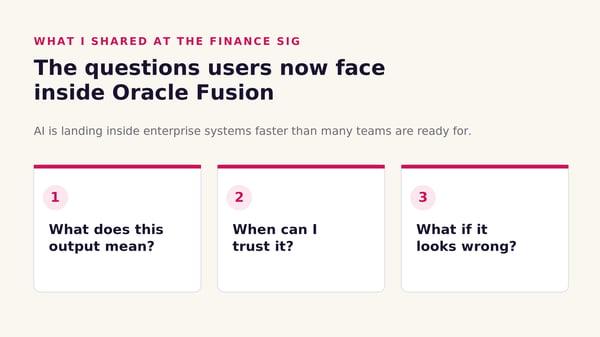
My presentation focused on a simple point: AI is being deployed within enterprise systems faster than many businesses are ready for. In finance, especially, that creates a very specific challenge. People are being asked to work with new prompts, suggestions, and AI-supported outputs in Oracle Fusion, but they do not always have the right level of support for what those outputs mean, when to trust them, or what to do when something does not look right.
That is where I positioned Oracle Guided Learning (OGL). Not as a bolt-on training tool, and not as something separate from the work itself, but as a practical way to support people in the moment they need guidance. If AI is going to become part of everyday decision-making, then users need clear prompts, context, boundaries and reassurance inside the flow of work, not in policy documents or training decks they may have seen weeks earlier.
Why it resonated with customers
What stood out afterwards was how strongly customers related to that message. The reaction was less about excitement for AI in the abstract and more about relief that someone was acknowledging the practical reality. Organisations are not resisting AI. They are trying to work out how to introduce it responsibly, without forcing it on users and expecting them to figure everything out as they go.
The readiness framing gave people a more realistic starting point. AI adoption does not have to be all-or-nothing. It can be built in stages, with the right governance, the right support, and a clearer understanding of where users are likely to hesitate or make inconsistent decisions.
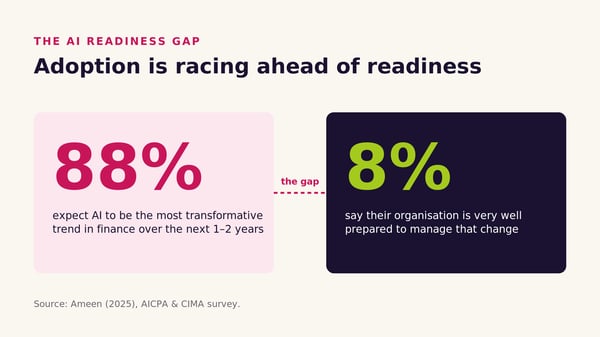
The bigger picture is reflected in recent industry and academic research, which suggests that adoption is racing ahead of people’s understanding. For example, Ameen’s (2025) AICPA and CIMA survey found that 88% of finance professionals expect AI to be the most transformative technology trend in accounting and finance over the next 1-2 years. Yet, only 8% say their organisations are very well prepared to manage that change. In addition, Brown’s (2025) Skills England report on AI skills made a similar point at the national level, noting that many employers still do not know where to begin, and the biggest barrier is rarely access to the technology itself, but lies in understanding the skills, behaviours, and structures needed to use it well.
Introducing AI at work without proper consultation and support can put real strain on people, with anxiety, stress, burnout, and resistance often surfacing when individuals feel they are losing their sense of agency, control, and/or voice (e.g., Institute for the Future of Work, 2025). Another interesting insight is that overconfidence, which is often more prevalent among younger users, carries the opposite risk: using AI without sound judgment, missing potential hallucinations, or overlooking ethical and legal implications (RMIT University, 2026).
How AI changes the OGL conversation
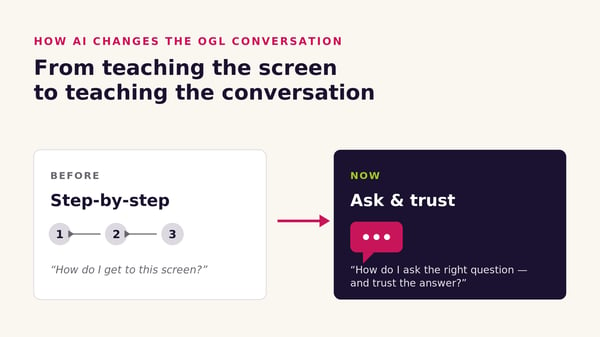
Redwood is reshaping OGL content. Redwood pages are replacing the traditional Oracle interface and an “Ask Oracle” homepage, likely within the next 12–18 months. Most OGL content today is anchored to screens that are actively being redesigned, so existing guides will need to be rebuilt and refreshed as Oracle continues to enhance pages and features with each release.
Agents are taking on more in-flow support. The Expenses Agent emailing employees for missing information, or the Payables Agent defaulting cost centres, removes steps and alleviates friction that OGL existed to reduce. Where the agent guides the user, OGL is no longer the primary hand-holder.
Changing and evolving ways of working. For end-users, the skills gap shows up in a very specific way inside Oracle Fusion. The question they need help with is no longer just “how do I navigate (to) this screen?” It is also “how do I ask the right question, and how do I know if I can trust the answer?” That is a different kind of capability than traditional system training was designed to address, and it is one of the clearest places where OGL has a role to play.
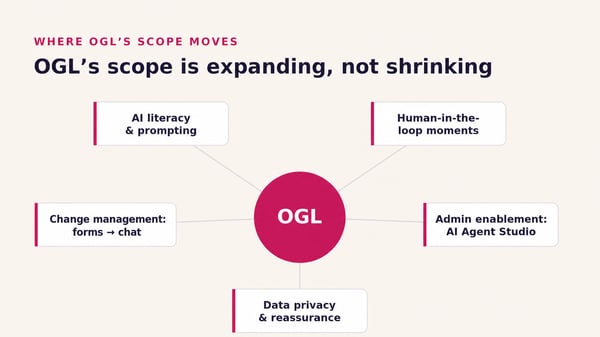
None of this makes OGL redundant. Its scope shifts. The strongest new use cases include AI literacy and prompting skills (e.g., writing prompts and evaluating outputs), the human-in-the-loop moments where a wrong click carries critical consequences, change management as users move from forms to chat, admin enablement around AI Agent Studio, and information and reassurance on data privacy. With Oracle rolling out new agents every quarter, any existing guides will need a faster refresh cycle to stay current. This means that OGL will be ever-evolving, with enhancements and additions alongside system updates.
Final thoughts
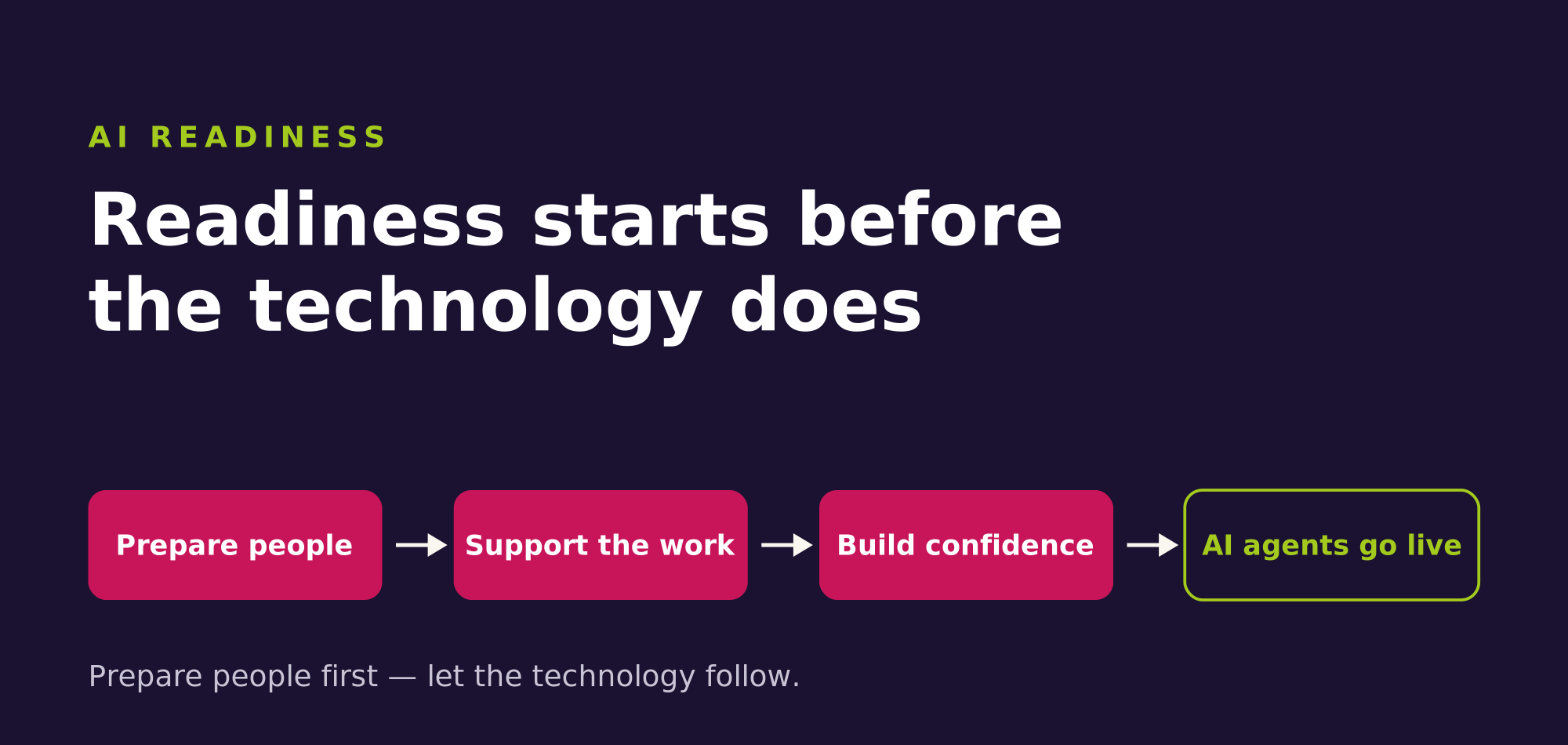
The conversation has moved on from what AI can do to how to introduce and use it properly. If there was one message that I wanted people to take away from the Finance SIG, it was this: AI readiness starts before automation, agents, or new features go live. It starts with properly preparing people, supporting them in the flow of work, and making sure confidence keeps pace (or aligns) with capability.
OGL is not going away. Its scope is shifting with (and as) the system advances, from teaching the screen to teaching the conversation, the trust boundary, and the change. The organisations that re-tool fastest around AI literacy and Redwood will get the most value from what AI inside Oracle Fusion can offer.
In a follow-up piece, I will go into more detail on where OGL can support specific Oracle Fusion use cases and how that connects to AI readiness more practically.
Key takeaways
✓ AI readiness is a people and process challenge as much as a technology one.
✓ OGL’s role is shifting from screen-based walkthroughs to AI literacy, trust, and change support.
✓ The Redwood UI and conversational interfaces (such as AI Agents) are reshaping what in-app guidance needs to look like.✓ The organisations that prepare their people first will adopt AI fastest and most responsibly.